…On Legitimizing Grassroots Innovation
It has been a little over two months since I have been back in Nepal. A few days after arriving, I found myself agreeing to Minister Mahabir Pun’s invitation to join his team as an advisor at the newly formed Ministry of Science, Technology, and Innovation.
One of the first things Mahabir dai asked me to do was develop a framework for assessing grassroots innovation. The Ministry had a modest innovation fund, and he wanted to find a way to also support grassroots innovators who often struggle to compete with more conventional research and technology proposals. The challenge was to come up with an approach that was fair to these innovators, while also ensuring the rigor and accountability expected of public funding.
My interest in grassroots innovation goes back to my college days. In 2011, after watching this TED talk by Bunker Roy, I visited the Barefoot College he founded in Tilonia, Rajasthan, to learn about its approach to building local capabilities using the knowledge and skills already present in communities. In 2015, I also experimented – with support from MIT’s D-Lab – with the idea of a Rural Technology Lab in Palpa and Lamjung, with the hope of creating a space to support grassroots innovators. What interested me then, and continues to interest me now, is how we might better recognize and support the practical solutions people develop within their own communities in rural areas, often with very limited resources.
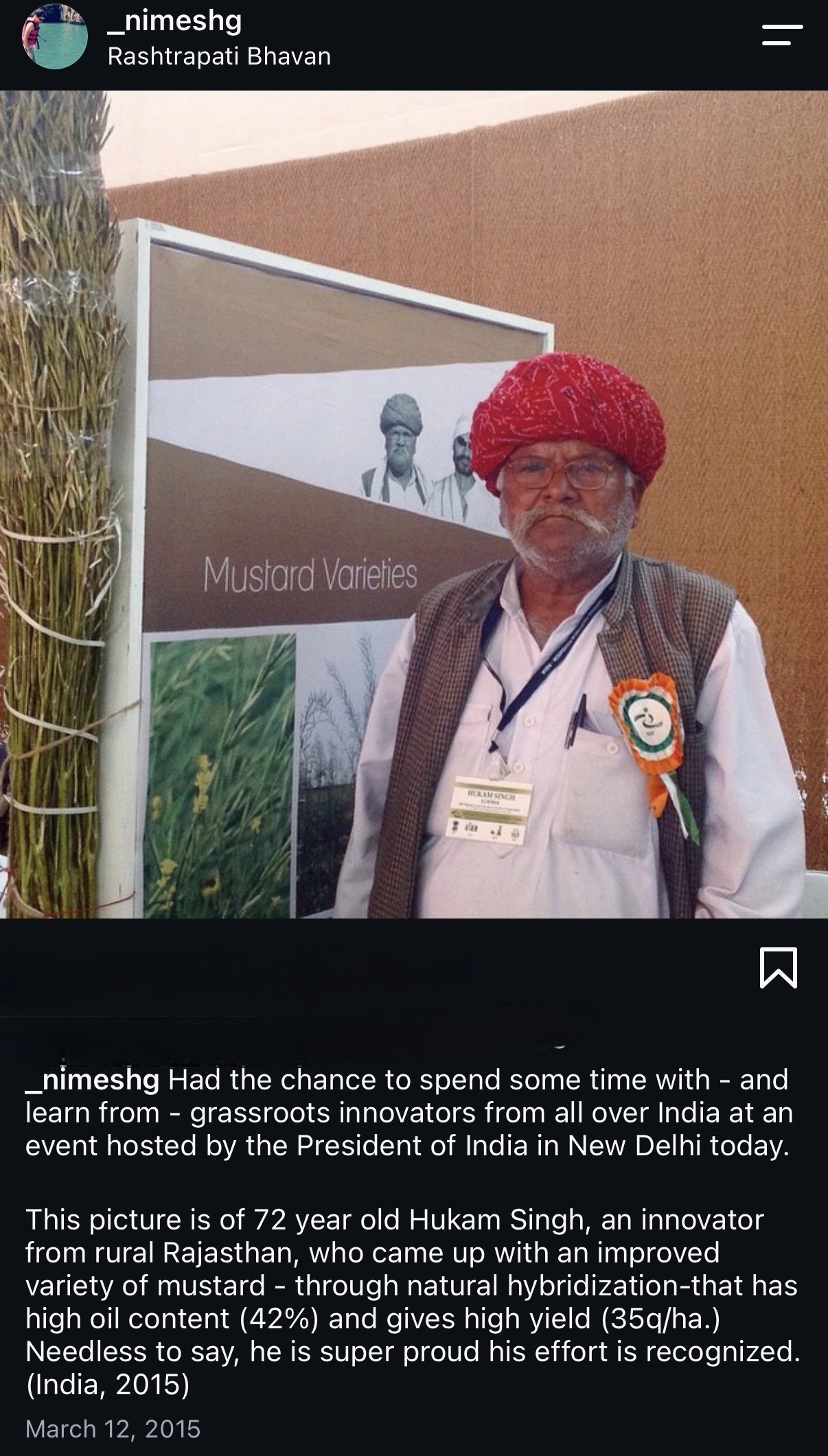
Two other experiences are also relevant. The first was in March 2015, when Professor Anil Gupta kindly invited me to an innovation showcase at Rashtrapati Bhavan, the Indian President’s residence in New Delhi. I had been following his work with the Honey Bee Network for some time and was curious to see how India was recognizing grassroots innovation. I remember meeting Hukam Singh, a 72-year-old farmer from rural Rajasthan, who was proudly presenting an improved variety of mustard he had developed through natural hybridization. He was clearly very pleased that his work was receiving recognition at the national level.
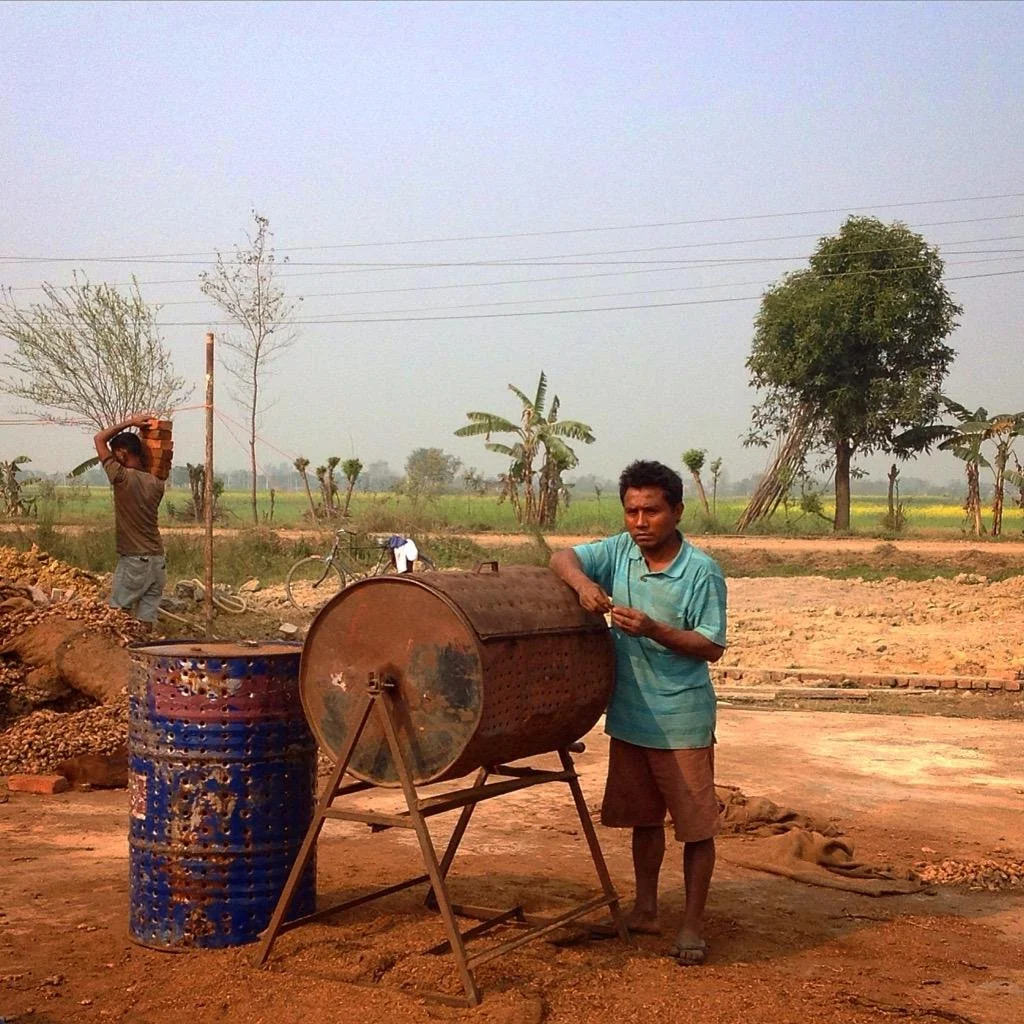
A month later in April, I found myself in Butwal, where I met a farmer from Palpa who had developed a ginger-peeling machine using locally available materials. The machine cost him around $50 to build, compared to over $900 for a commercially available alternative. I wrote about this experience some years ago about how locally developed technologies could address practical problems at a fraction of the cost.
India’s Honey Bee Network and National Innovation Foundation have been particularly interesting to me, for both recognizing grassroots innovators and for connecting them with scientific institutions, technical expertise, and opportunities for further development. There are some useful lessons here for us in Nepal.
Anyway, coming back to our Ministry’s innovation fund, we started by asking whether it made sense to assess a university researcher, a technology startup, and a farmer developing a practical solution in the same way. We eventually developed two assessment pathways: one for technology, product, and enterprise innovation, and another for grassroots innovation.
Both pathways share five broad dimensions: the problem being addressed, the innovation itself, evidence of its effectiveness, the value it creates, and its potential for further development. But the kinds of evidence available to innovators can vary considerably. A farmer who has developed an agricultural tool, for instance, may be able to demonstrate its effectiveness through years of practical use, even without formal technical documentation or laboratory testing.
The idea was to be more thoughtful about how we assess innovations emerging from different circumstances. We wanted to retain common standards without making familiarity with formal research or funding processes a prerequisite for support.
I think there is an important distinction between recognizing grassroots innovation and giving it institutional legitimacy. The former is about acknowledging the ingenuity of individual innovators. The latter requires us to think about how our institutions define innovation, the evidence they consider credible, and the kinds of support they make available. And the criteria we use through the Ministry to assess innovation and allocate resources inevitably influence whose ideas are taken seriously.
And of course, there is also the question of what happens after recognition. How do we connect grassroots innovators with technical expertise, testing facilities, research institutions, and resources to develop their ideas further? These are areas where I think our universities and other institutions could have an important role to play.
The Ministry’s innovation fund is a relatively modest initiative, but I am glad that we have been able to incorporate some of this thinking into the assessment framework now being used to evaluate proposals. There is still more to do, particularly in connecting grassroots innovators with the technical expertise, research institutions, and other resources they need to develop their ideas further. But I think this is a small but important step toward giving grassroots innovation greater legitimacy within Nepal’s formal innovation ecosystem.
***